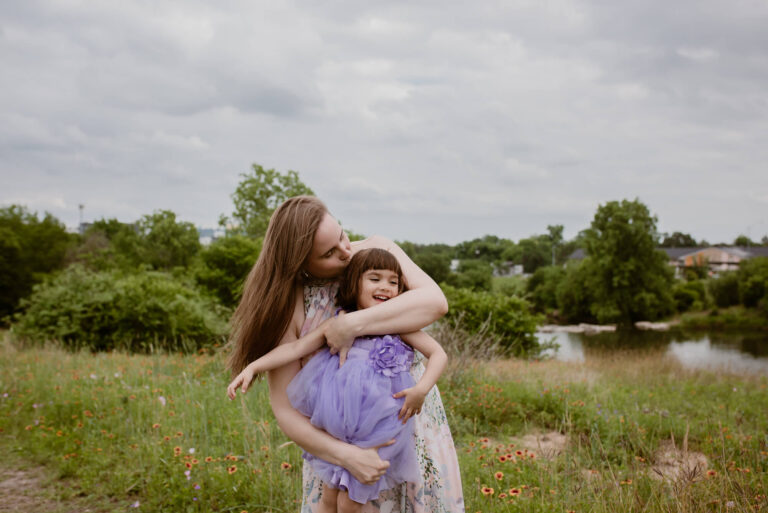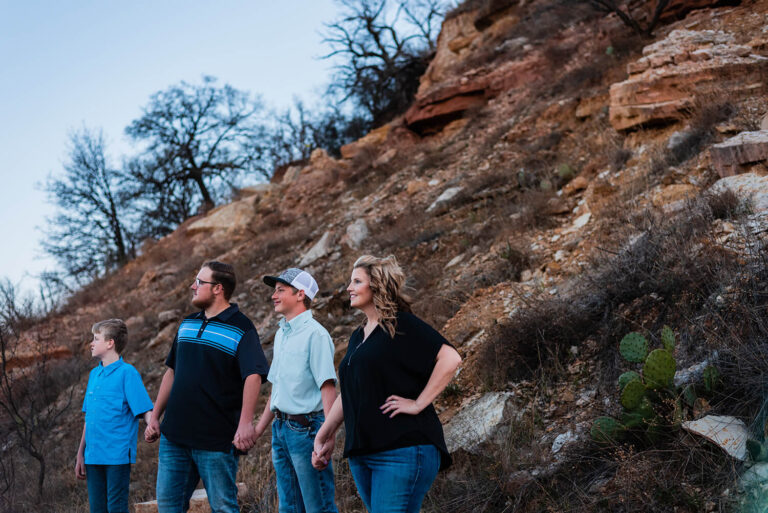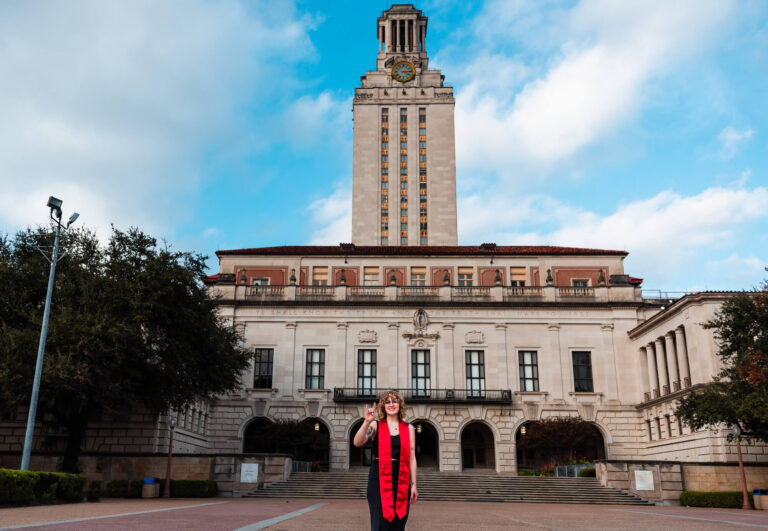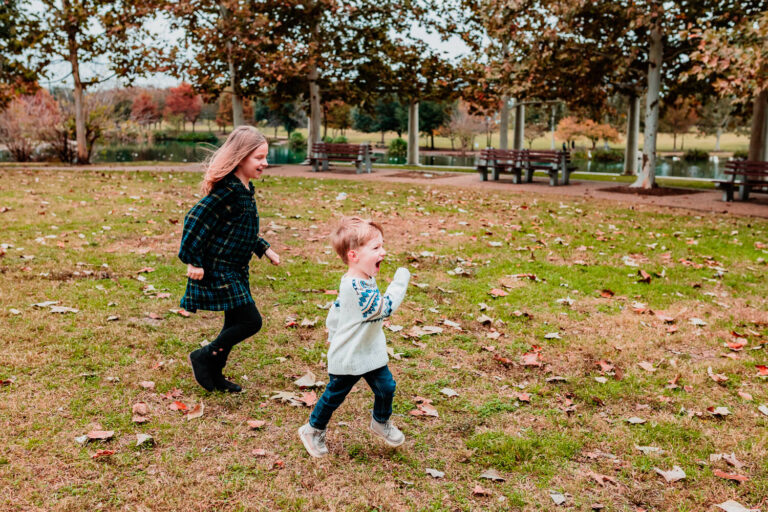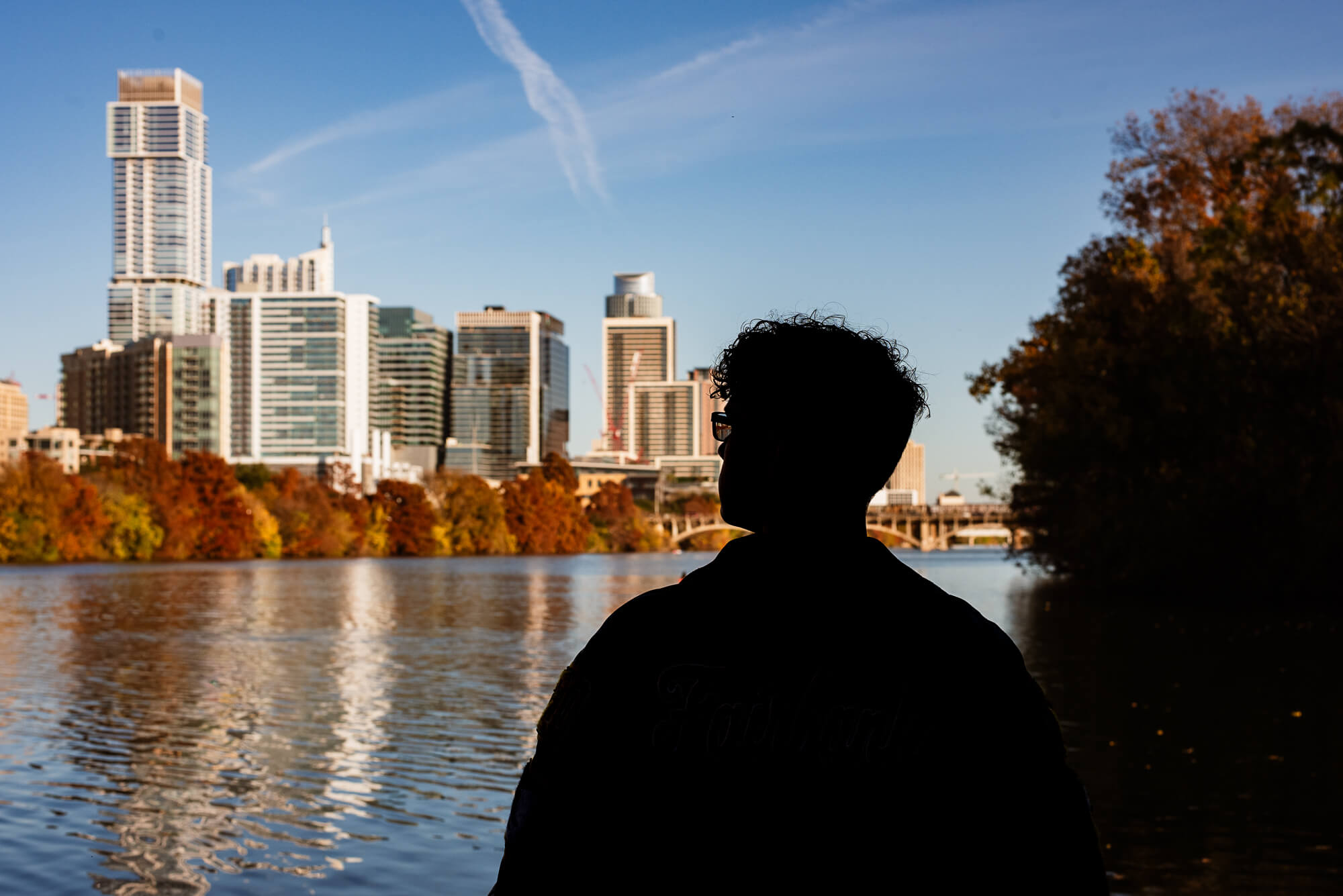
Wondering where to take great fall photos in Austin?
For families, seniors, and everyone who’s wondering when and where they can see that beautiful fall foliage color change in Austin, Texas…
Let’s get something out of the way first: fall here does not look like fall in New England. If you are picturing a canopy of red and orange trees in mid-October, our trees are working on their own timeline and they are not in a rush.
The good news is that fall photos in Austin can be stunning. The light gets better, the temperatures drop enough to actually be outside comfortably, and there are real pockets of color if you know where to look and when. Use the guide below to figure out what’s right for you.
Austin Fall Photo Locations
All of these spots are beautiful in fall — here’s what to know.
Roy G. Guerrero Park
Walnut Creek Metro Park
Red Bud Isle
Butler Metro Park
Brushy Creek Lake Park
Commons Ford Ranch
Southwest Greenway
Blunn Creek Greenbelt
Featured Fall Sessions on the blog
Click below to see more family and senior fall photo sessions on the blog!
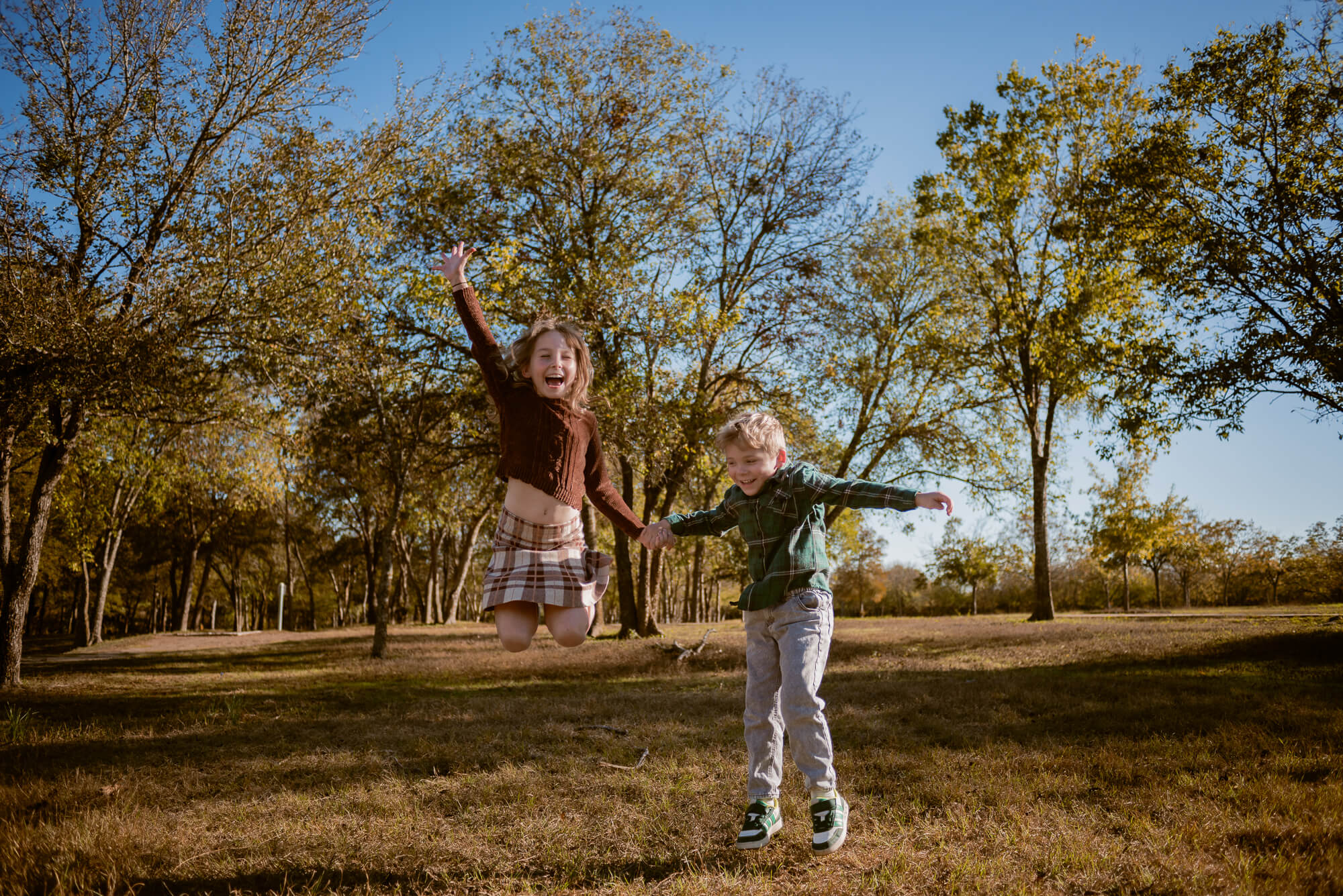

Ready to book?
Book Your Fall Session
The best fall color in Austin doesn’t peak until late November and those dates go fast. If you want to be there when the trees actually turn, now is the time to get on the calendar.
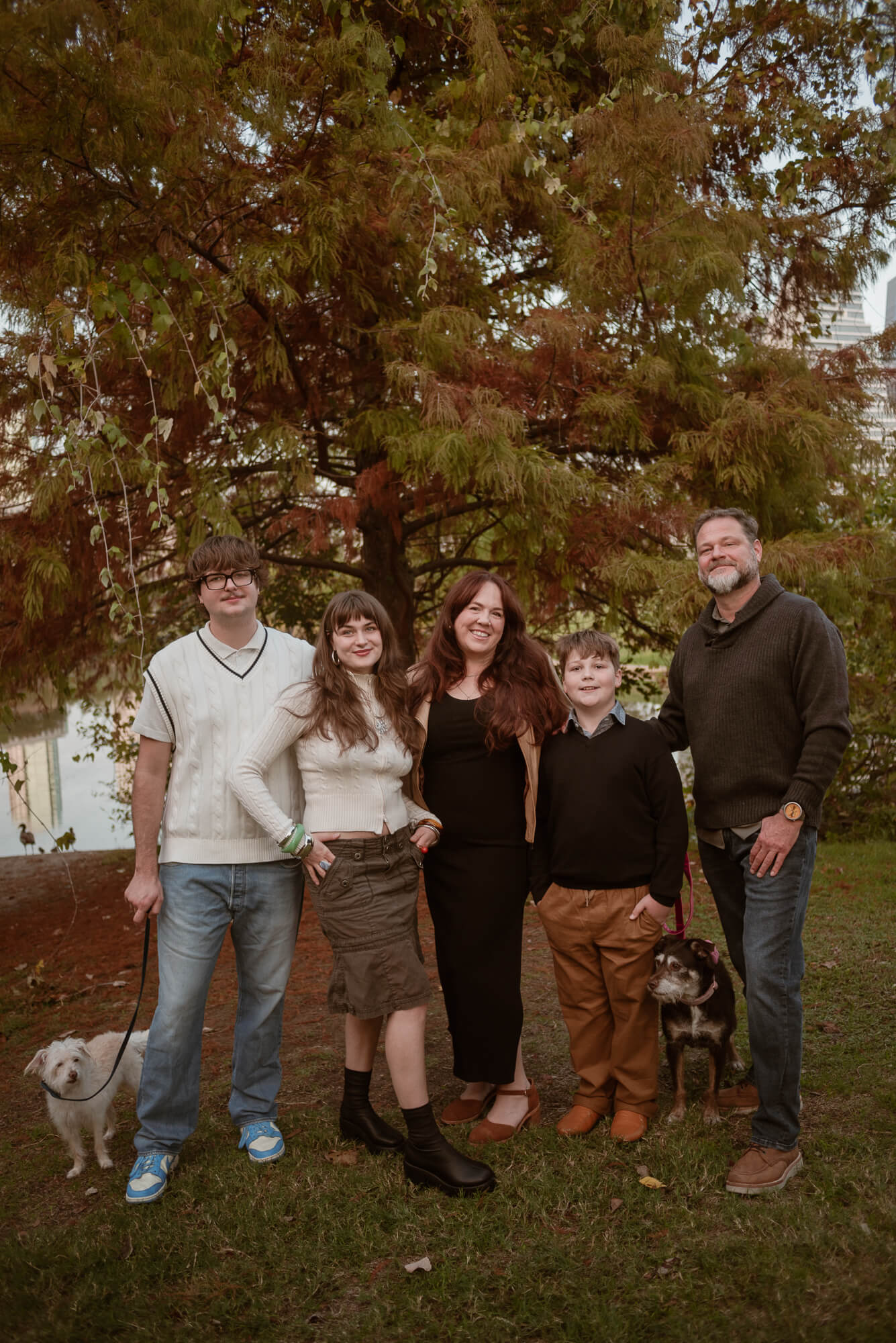
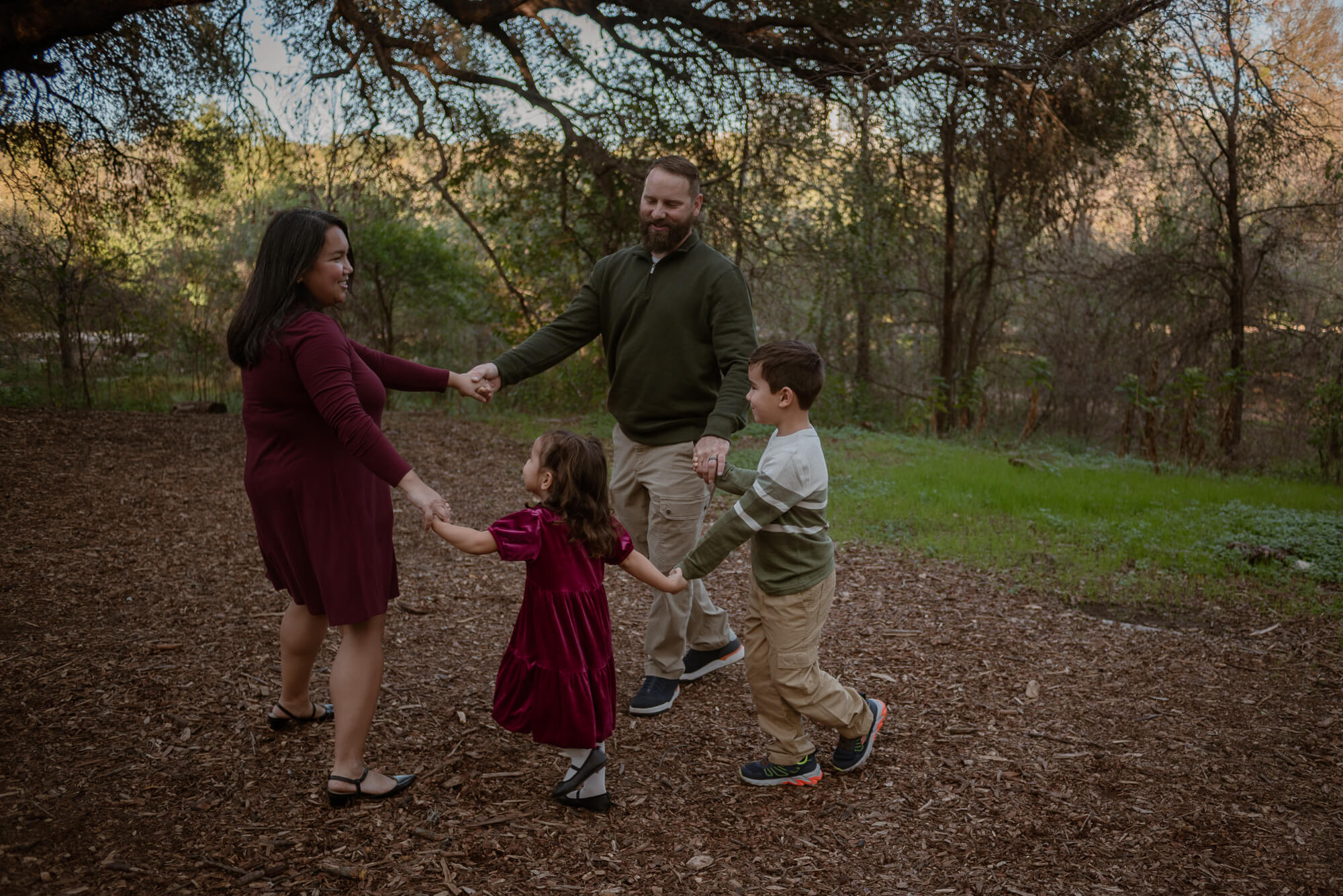
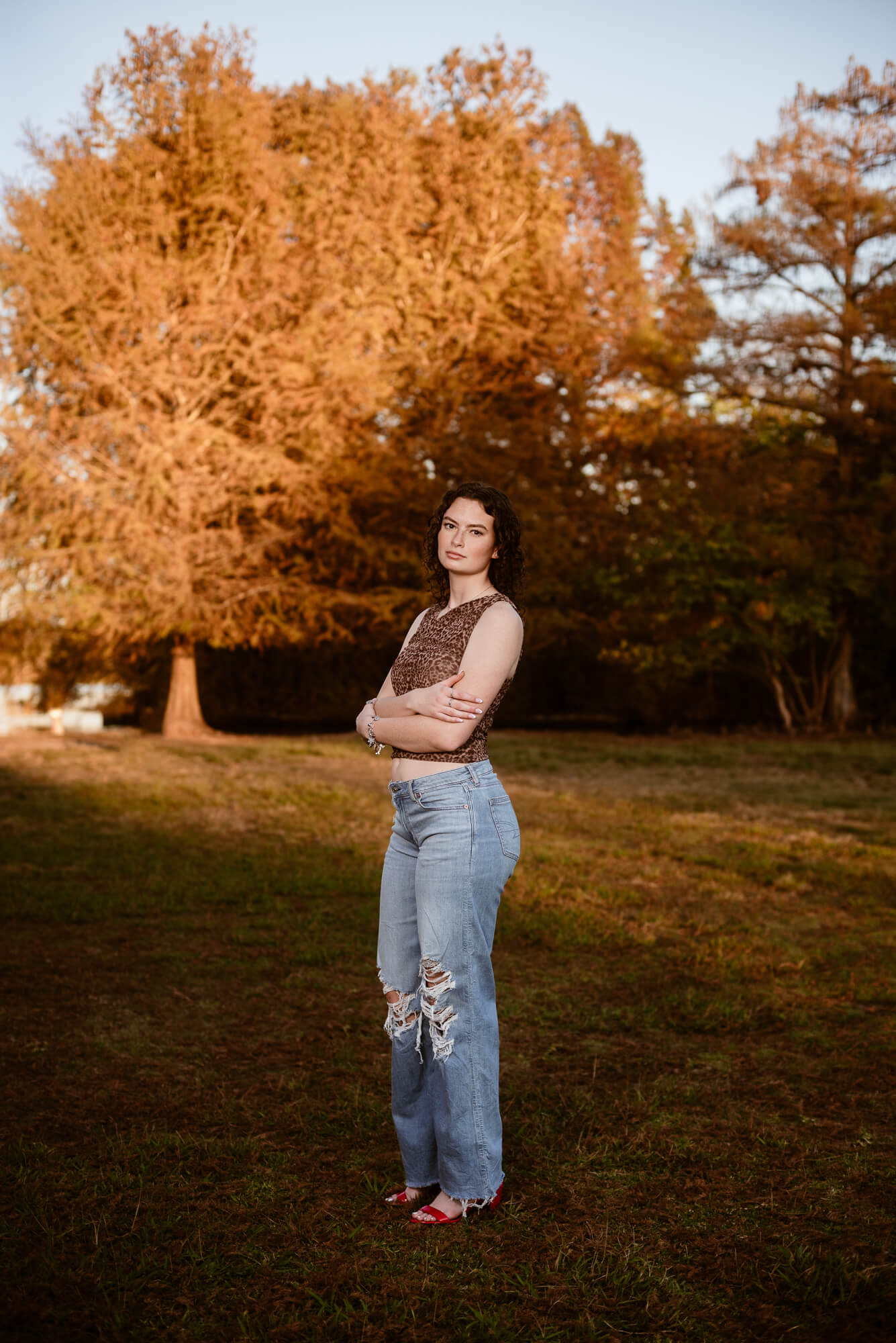
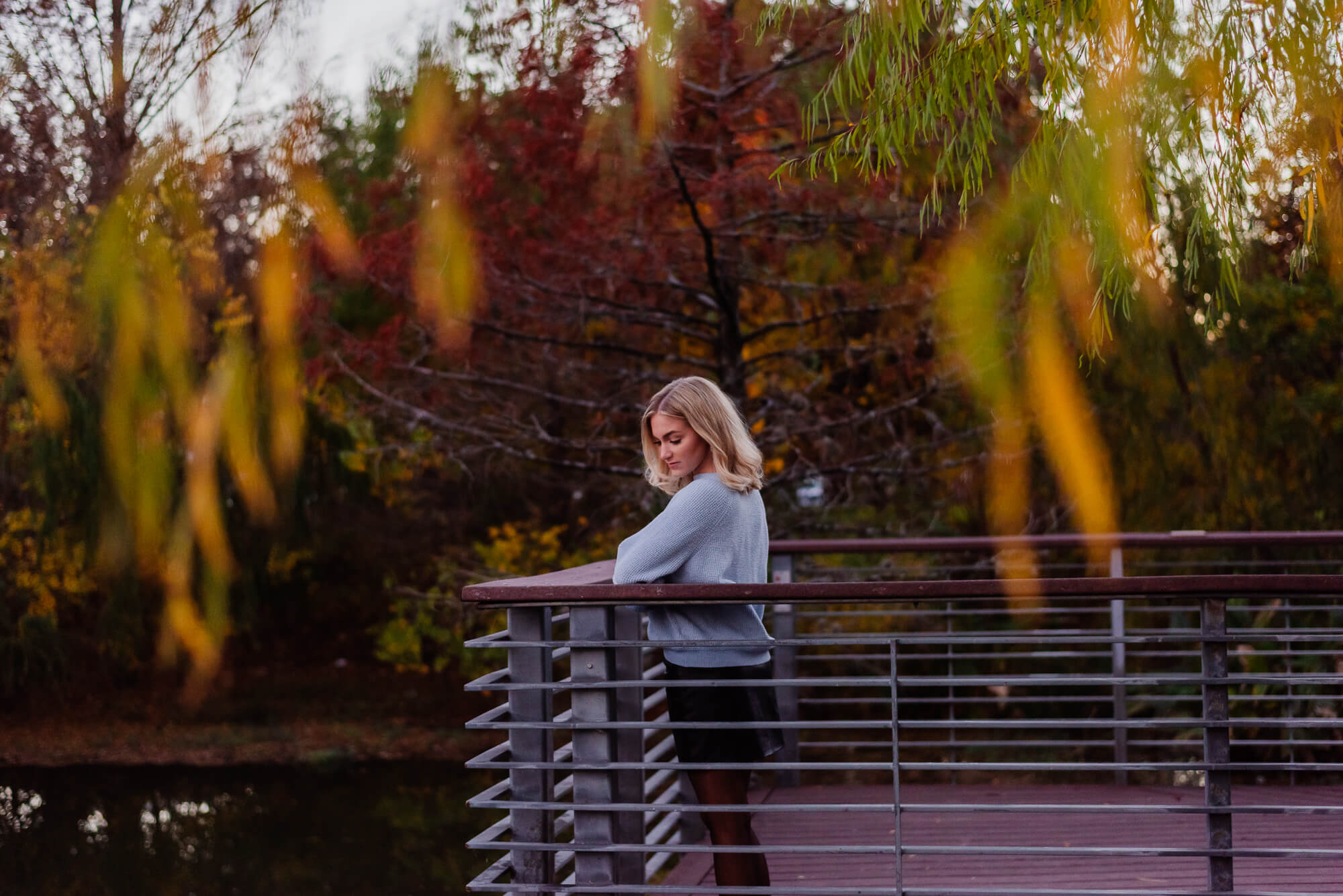
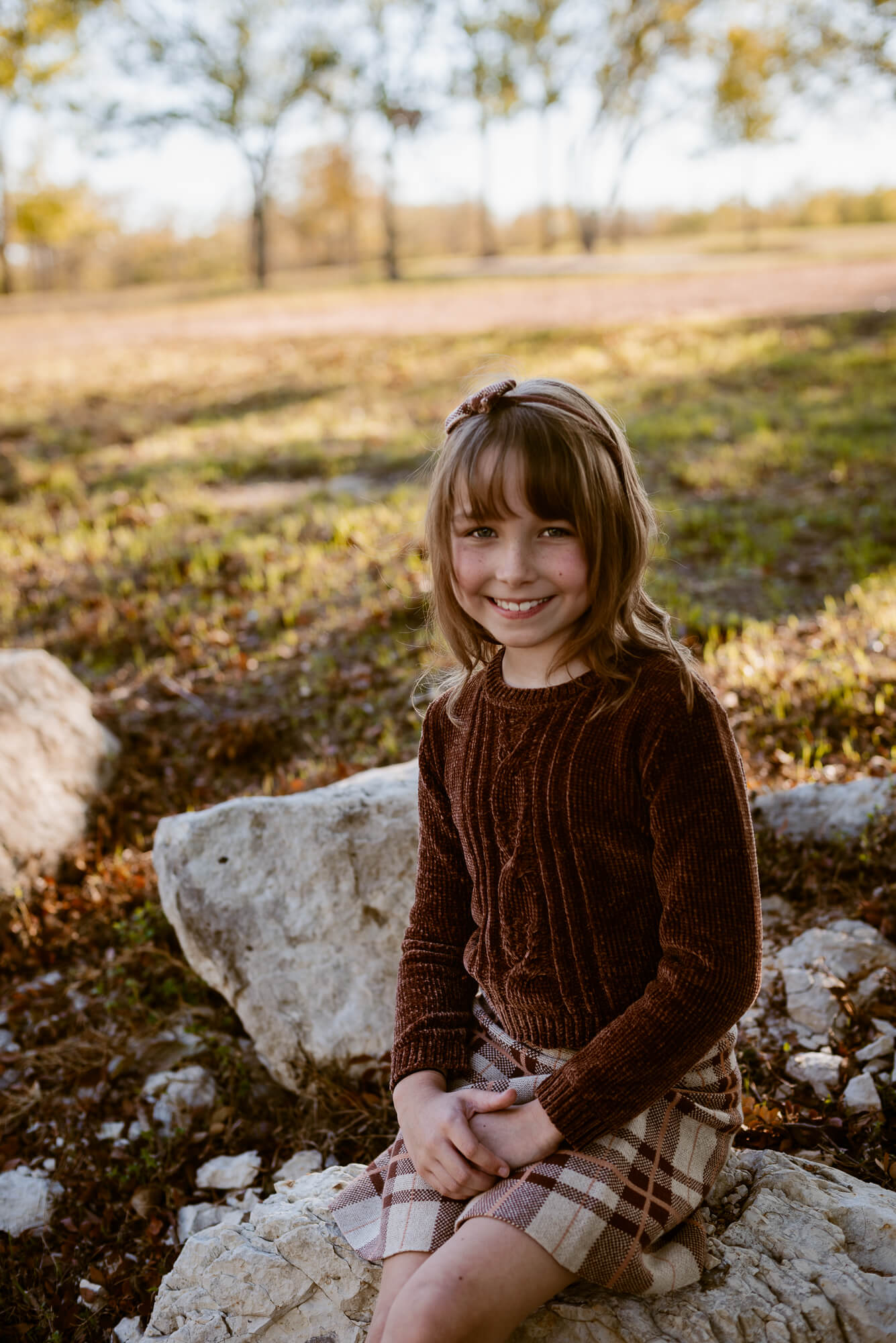
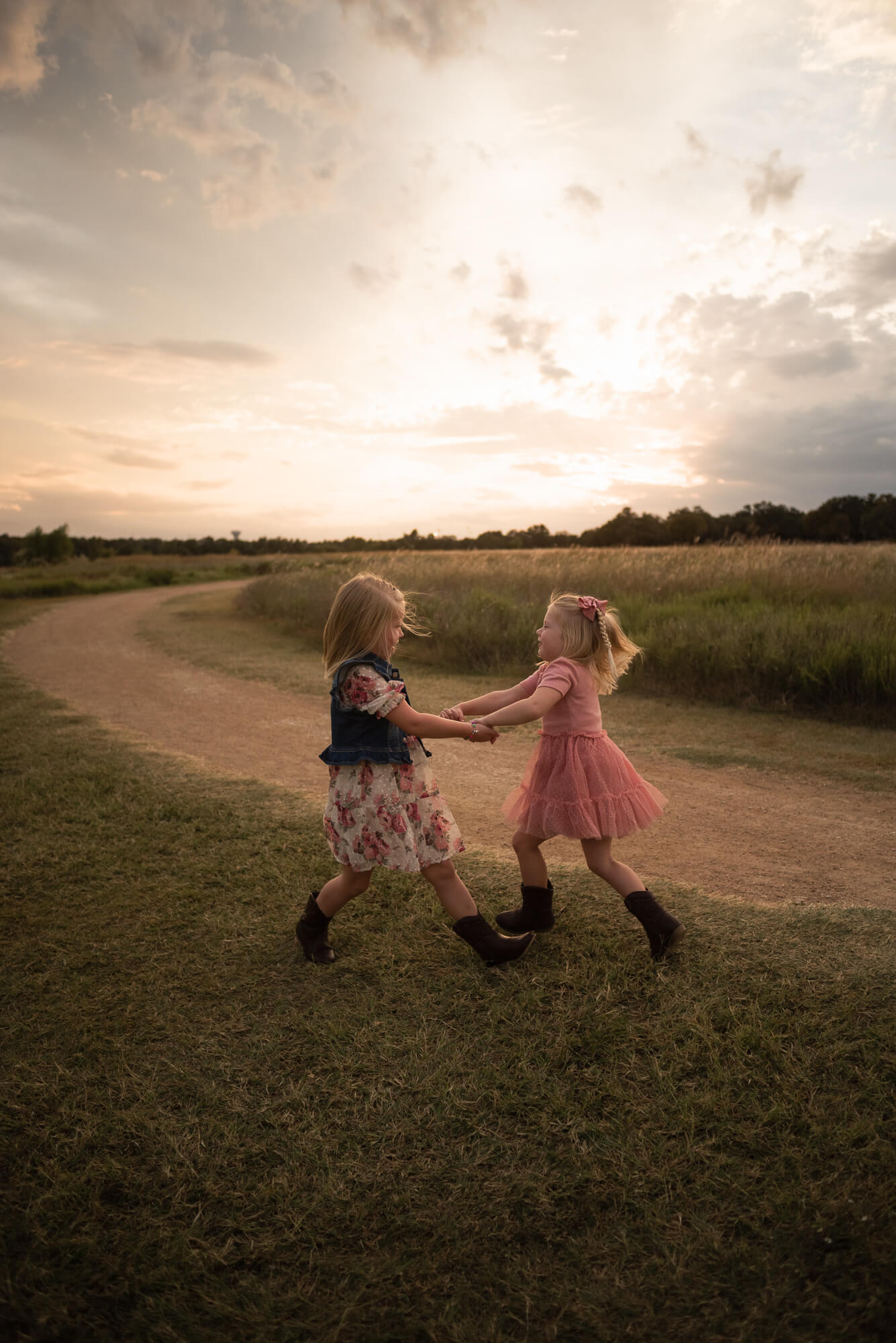
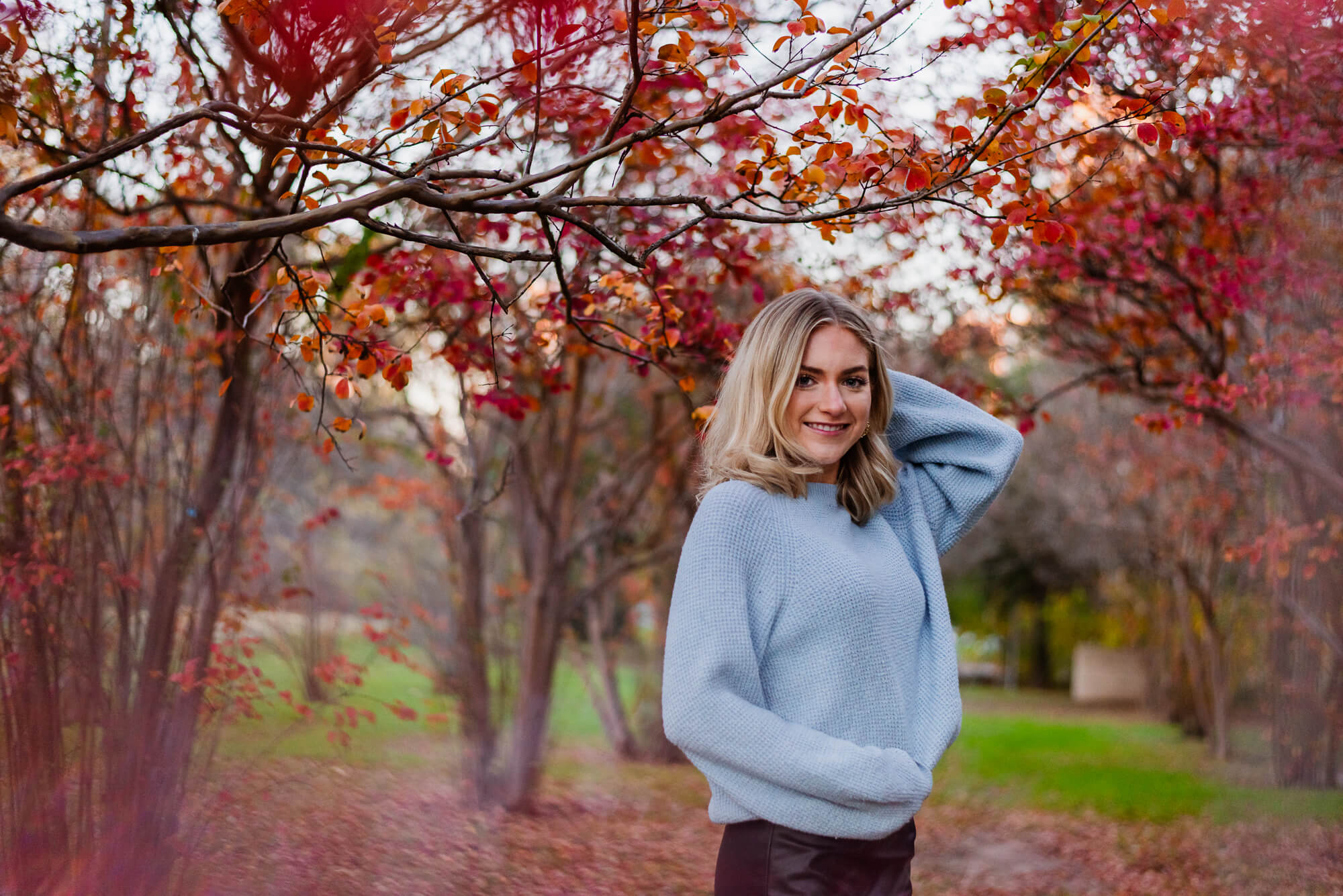
What Fall Looks Like Here in Austin, TX




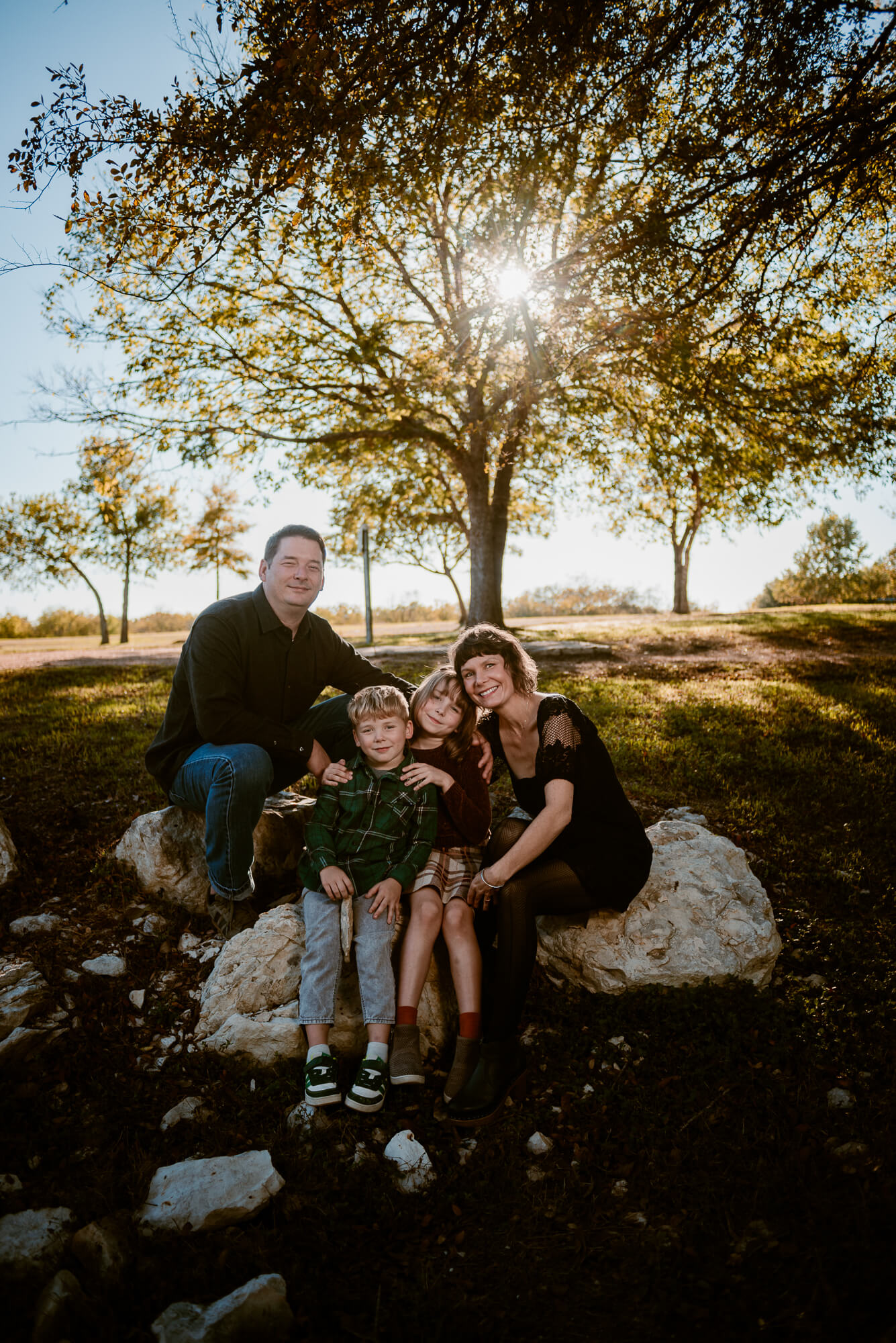

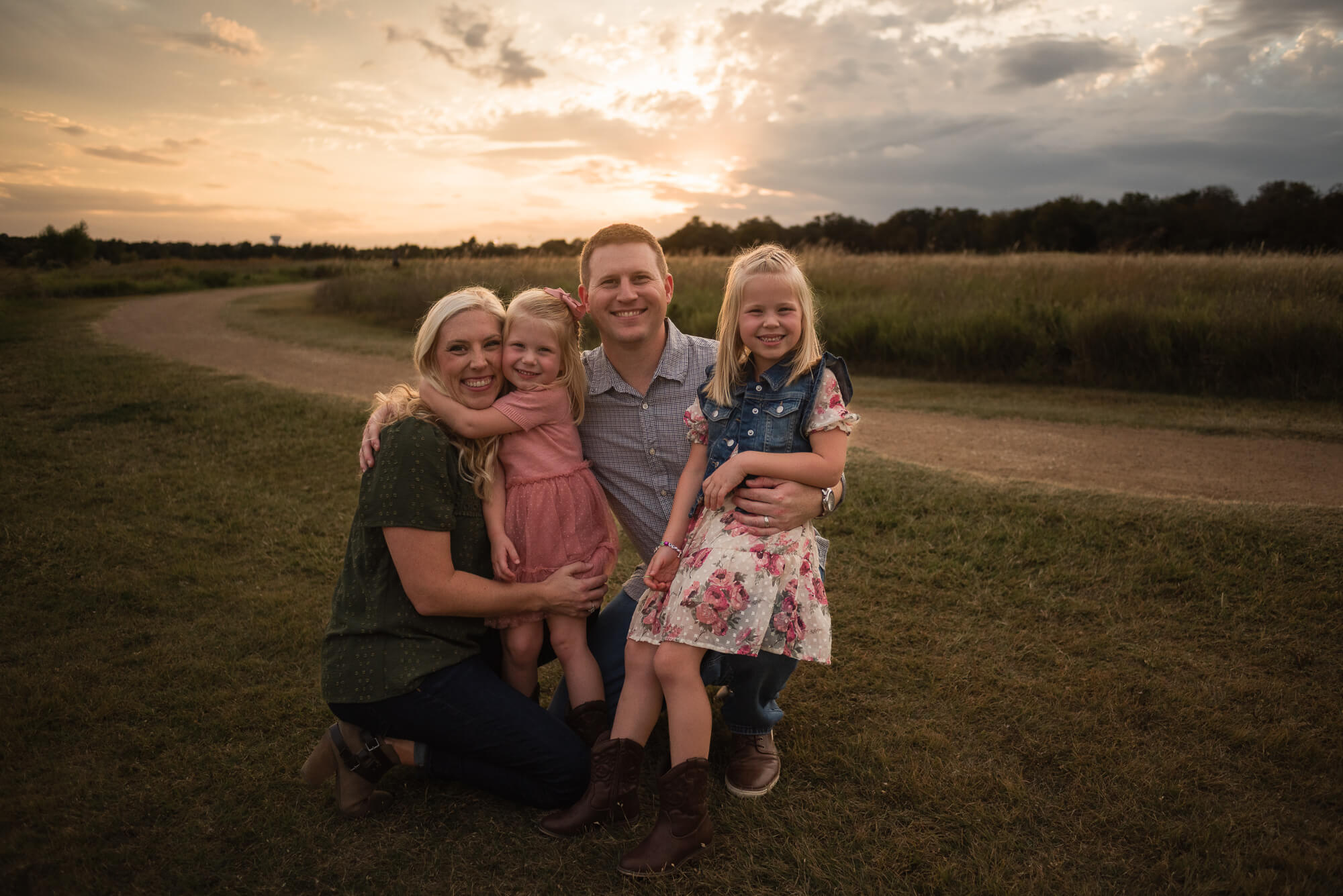
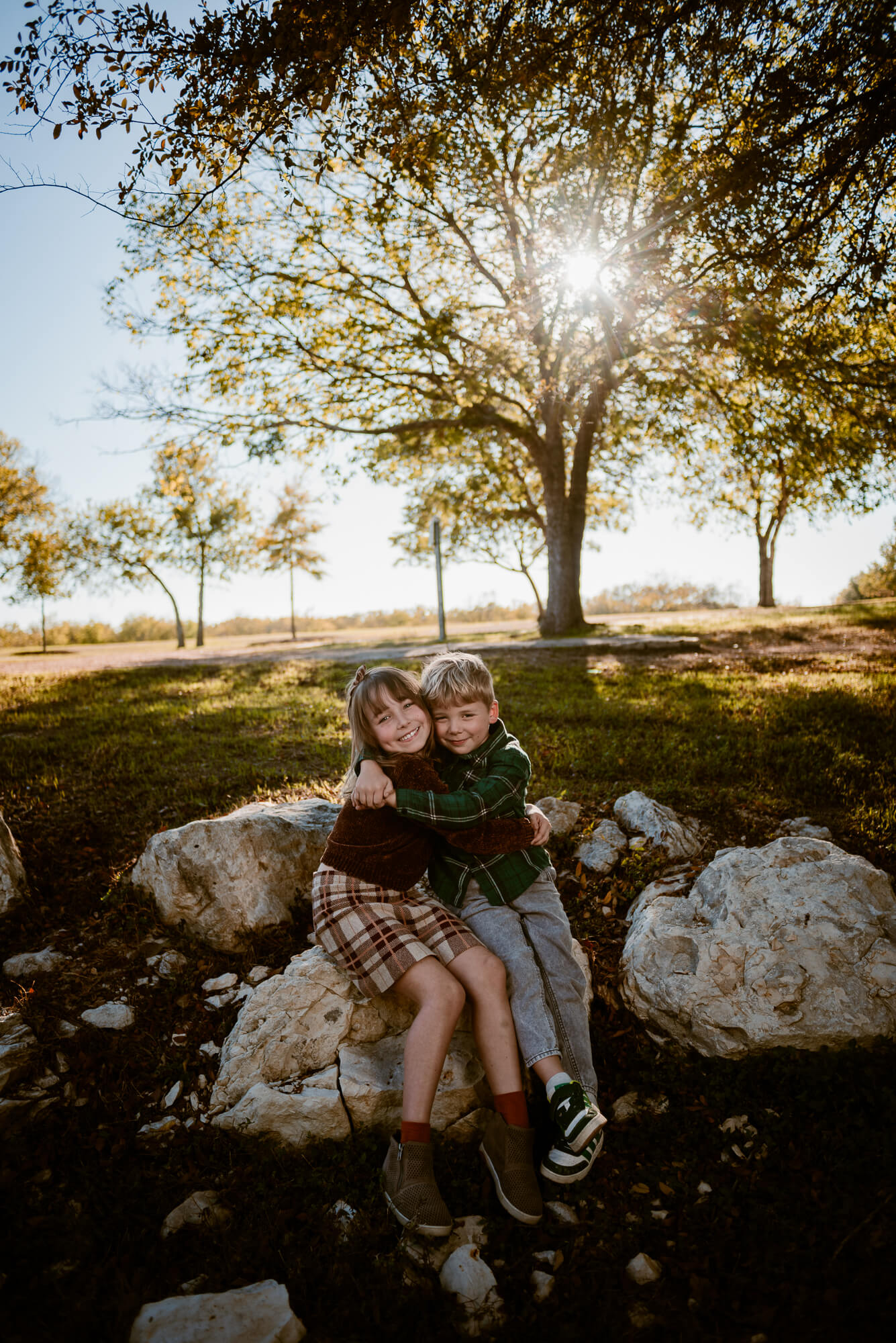



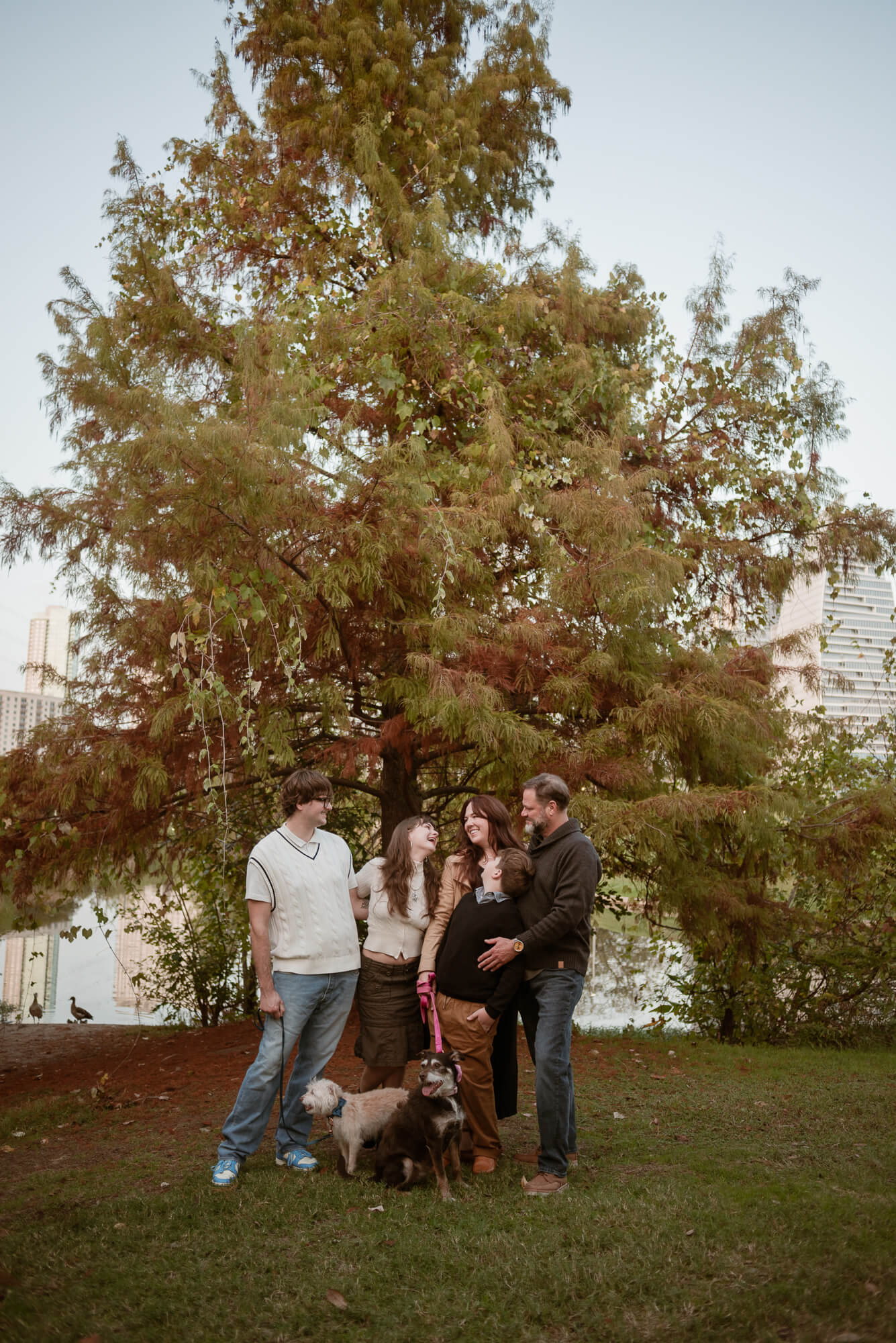
Expert Insight from Treefolks
I Asked TreeFolks About Fall Foliage in Austin
I’m no tree expert, but I reached out to TreeFolks and they came through with all the questions I had about trees, fall, and what to expect in Austin, Texas. TreeFolks is a nonprofit dedicated to planting and caring for trees across Central Texas. I reached out to them to get all the details on Austin’s fall foliage, from when it actually happens, what to look for, and where to find it. Here’s what they told me.
Which tree species in the Austin area typically show color before November?
Since cooling temperatures have been arriving later and later during the fall, there aren’t many trees beginning to show their fall colors until later in the fall. So, Trees Native to Central Texas will begin showing signs of their fall color transformation in late October/early November, with peak color typically occurring in late November through early December.
The Mexican Plum and the flameleaf sumac are among the earliest to show fall colors. Sometimes as early as late October. The Mexican plum leaves turn a golden yellow, and the Flameleaf sumac turns a stunning red. Red oaks, Cedar elm, and Texas ash are a couple of others that will be some of the first to show color.
The Red Buckeye is the earliest to drop its leaves, usually by mid to late summer. Because of the summer heat, the leaf turns quickly from green to brown, then drops after a couple of days.
Which of those trees are common in Austin parks and public spaces?
Red oaks are some of the most common trees you will find in Austin parks. They are large shade trees that provide many benefits to local wildlife, and their leaves turn a striking red color that you will see throughout Austin in the fall.
You will also find cedar elm in nearly every park because of its hardiness, adaptability, shade canopy, and beautiful golden fall colors. This is a highly adaptable native tree that performs well throughout Austin’s varied landscapes.
Some of my other favorites that can be found around Austin, but may take a little more effort to find, include flameleaf sumac, roughleaf dogwood, western soapberry, rusty blackhaw viburnum, Carolina buckthorn, and bigtooth maple.
The Flameleaf sumac has a vibrant red fall color that can be seen throughout the limestone soils of West Austin. Roughleaf dogwood is commonly found alongside creeks, rivers, and lakes, and turns a beautiful purple in late November. Western soapberry, like roughleaf dogwood, can also be an indicator that water may be nearby and develops a lovely golden color around mid-November. Rusty blackhaw viburnum is another hidden gem, with oval, waxy leaves that turn a beautiful plum-purple color around mid-November.
Are there specific parks or greenbelts where these early-color trees are concentrated?
I like to visit areas with a high diversity of trees and shrubs. That usually means places that run alongside a consistent water source, which Austin has plenty of thanks to the Colorado River, Edwards Aquifer, and our many creeks. These areas support a greater diversity of species, which creates more fall colors, shades, and combinations.
I take my dog to Walnut Creek Metropolitan Park and really enjoy the transition between wetland and upland species and the variety of colors that come with it. Roy G. Guerrero Colorado River Metro Park is another great place to experience fall colors.
What actually drives the timing of fall color — species, drought, microclimate, or soil?
The biggest drivers of leaf color change are cooler temperatures and shorter days. As temperatures begin to cool in late October and daylight decreases, trees slow their chlorophyll production, allowing the other pigments in their leaves to become visible. Species also play an important role in fall color. Different tree species contain varying amounts and combinations of pigments, such as carotenoids and anthocyanins, which create the yellow, orange, and red colors we see in autumn. Some species produce more of these pigments, while others produce very little or none, which is why certain trees develop vibrant colors while others simply turn brown before dropping their leaves.
The weather during this transition can have a major impact. Unusually cold temperatures or sudden freezes can stress trees and shorten the fall color season. A gradual cooling period typically results in more vibrant and longer-lasting fall colors. Sunny days combined with cooler temperatures also help trees retain sugars in their leaves, which can enhance color intensity.
Tree health is another important factor. Trees that receive adequate water throughout the growing season are generally better able to handle seasonal stress and often produce stronger fall colors than drought-stressed trees.
Microclimate also plays a role. Trees growing near rivers, creeks, and other reliable water sources often experience more consistent soil moisture and slightly cooler conditions, which can help reduce environmental stressors that affect fall color. Trees growing on higher, hotter, and drier ground may experience more stress, causing them to lose leaves earlier or produce less vibrant colors.
Does a hot, dry summer push color earlier, later, or make it less vivid?
Our summers are the most stressful season for our native trees. After a particularly hot and dry summer, trees tend to produce less vibrant fall colors and may begin dropping their leaves earlier because of drought stress. If trees experience a summer with plenty of rainfall, they are able to store more energy, which can result in healthier trees and brighter, longer-lasting fall color displays.
Once a tree starts turning, how long does peak color usually last?
Most trees have a relatively short fall color window, usually lasting about two to four weeks. When temperatures drop too low too fast, or other environmental stresses come into play, the window could be much shorter.
Is there an early-color tree that’s easy to overlook — a hidden gem for fall photography?
I think any of the species mentioned above are worthy of seeking out, but I want to give a special shout-out to rusty blackhaw viburnum. It is more of a shrub than a tree, but it is one that is easy to overlook. I often see them while walking through Austin’s greenbelts, usually about 30–40 feet from the water’s edge. They have oval, waxy leaves that turn a really beautiful plum-purple color around mid-November, making them a great hidden gem for fall photography.
Any specific spots you would personally point a photographer to for fall photos?
Walnut Creek Metropolitan Park and Roy G. Guerrero Colorado River Metro Park that I mentioned above are great locations. Just about anywhere along the Lady Bird Lake trail. There, you can find huge bald cypress trees that pair really well with the understory fall color and water background. Bull Creek Park, McKenny Falls State Park, and Pease Park are a few other spots with great trees and good fall colors