
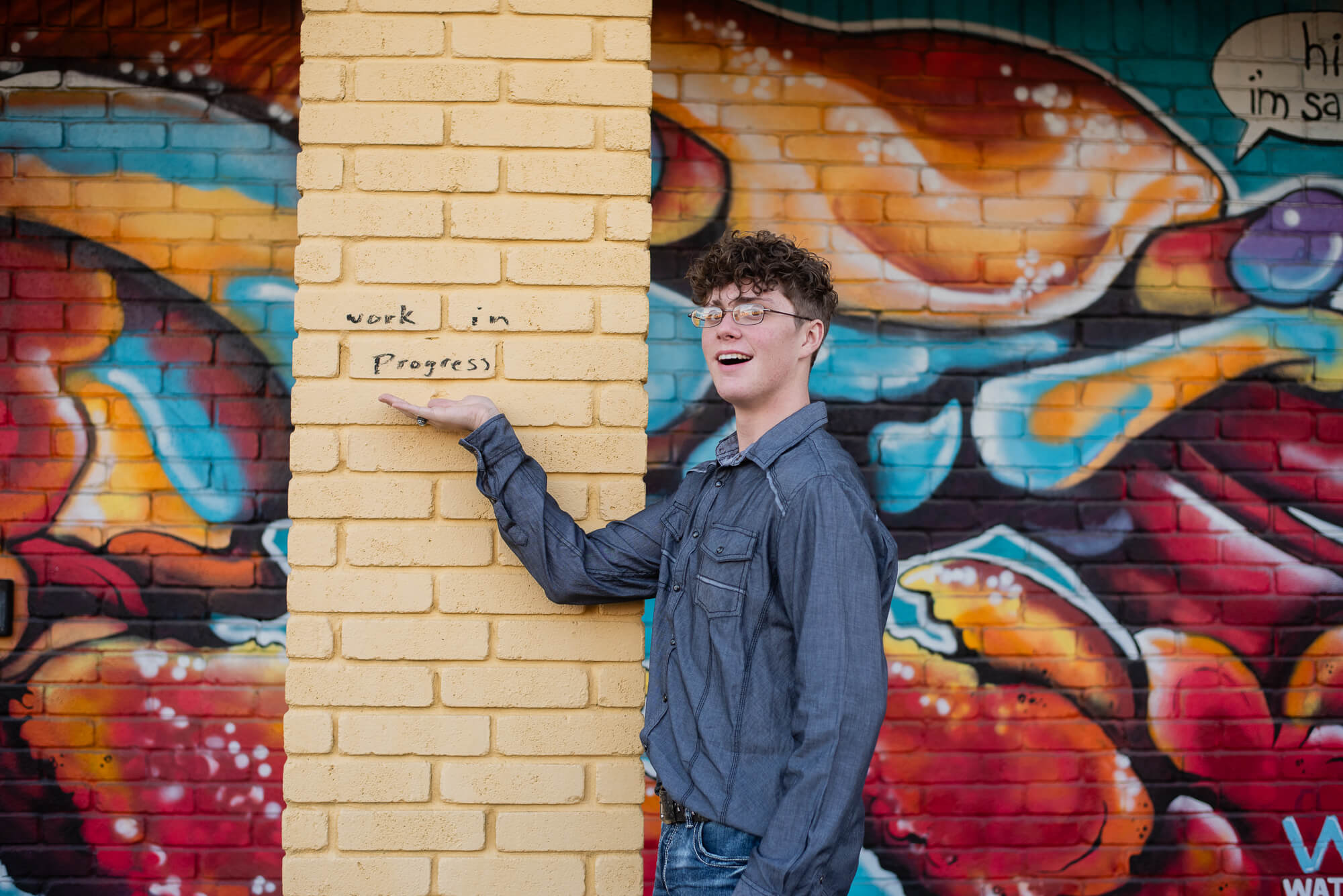
If you’re trying something new, you’re going to fail.
That stumble moment when something doesn’t go the way you planned, is part of life. But it doesn’t have to define your life. Unfortunately, it’s an awful feeling that can cause a person to give up or worse, just not try. Avoiding the pain seems easier than risking it. As humans, we’re hard wired to avoid pain at all costs.
You won’t have any regrets if you don’t try, right?
Wrong!
Why “No Regrets” Is Actually Holding You Back

Regret gets a bad reputation. But that uncomfortable feeling isn’t the enemy… it’s a signal. It’s your brain telling you that something matters to you, that you care about the outcome, that you’re paying attention.
The students who grow the most aren’t the ones who never fail. They’re the ones who get curious about their failures instead of running from them.
So instead of chasing a life with “no regrets,” what if you used those feelings to figure out what you actually value and what you want to do differently next time? That’s how growth actually works.
What Professional Athletes Know That Most Students Don’t
This is a very common practice in sports. Professional athletes study videos of their past games to see how and why they made mistakes so they can do better next time. Why do you not allow yourself the same reflection with traditional classes, grades, or other areas of life?
Instead, it’s often internalized and you begin to believe that you’re just not good at math (or whatever the subject) so you choose a college major that plays to your strengths. Or you’re not good at resolving conflict or handling money or whatever the skill or subject. You stop seeing it as something you haven’t figured out yet and start seeing it as something you simply are or are not. There’s no skill development there or nuance.

Why Playing It Safe in College Backfires
Don’t get me wrong, choosing not to try can seem like the easier path with less friction, but you’d be doing yourself a huge disservice. By choosing not to try, you’re telling yourself that when something is hard that must mean it’s not for you. However, in reality you learn more from your mistakes and grow into a better human when you make mistakes and take the time to reflect on them in a non-judgmental way instead of shying away from them.
The hard thing is usually a sign that you’re right at the edge of what you currently know how to do… which is exactly where learning happens. If it were easy, you’d already know it. The friction is the point.
Failure Doesn’t Define You. How You Respond To It Does.
Failure can feel like a critique on you as a person, which can often times lead to defensiveness and defensiveness makes it almost impossible to learn. If you want to do well in school it’s imperative to separate your feelings from the failures. Treat the failures like data points. Get curious about it. What happened, how did it happen, and why? That’s where the lesson is. It means showing yourself some compassion, and that’s not always easy. But don’t get so down on yourself that you can’t see what’s right in front of you.
The goal isn’t to be perfect. It’s to keep moving, keep learning, and know that the version of you on the other side of a hard thing is always more capable than the one who went in.

How to Prepare for College Failures Before They Happen
I’ve been giving a version of this workbook to my senior clients for a while now, as a thank-you after their session, because I genuinely want more for them than a beautiful set of photos. I want them to walk onto campus feeling ready.
The idea is simple: if you can imagine how things might go wrong before they do, you can detach from feeling like a failure. You’re not caught off guard. You already know what your options are. You’ve already thought it through from the outside, when you weren’t panicking.
This idea actually has a name in the research and business world… It’s called the pre-mortem. Before a project launches, you imagine the ways in which it can fail and work backwards to figure out how and why, so you can create strategies to help you through. I didn’t know it had a name when I built this. I just knew it worked.
Ready to work through it?
What’s in the Workbook
Here’s what’s inside:
One More Thing
School is hard. Growing up is even harder. And a lot of students spend their first year white-knuckling it alone because they think asking for help means they’re not cut out for this. They are cut out for it. They just needed to ask.
Most universities offer counseling services at low or no cost. If you’re feeling depressed, overwhelmed, or like the wheels are coming off, please reach out to your advisor, to a counselor, to a friend. Or call or text 988, the Suicide & Crisis Lifeline, any time.
You don’t have to have it all figured out.
The pre-mortem concept was developed by cognitive psychologist Gary Klein and is referenced in Daniel Kahneman’s Thinking, Fast and Slow as well as Adam Grant’s work. If you want to go deeper on the research side, Gary Klein’s original Harvard Business Review article is a great place to start or listen to The Curiosity Shop for Brené and Adam talking through the concept in a really accessible way.







One Comment